
2026 International Conference Speakers, Bios and Sessions
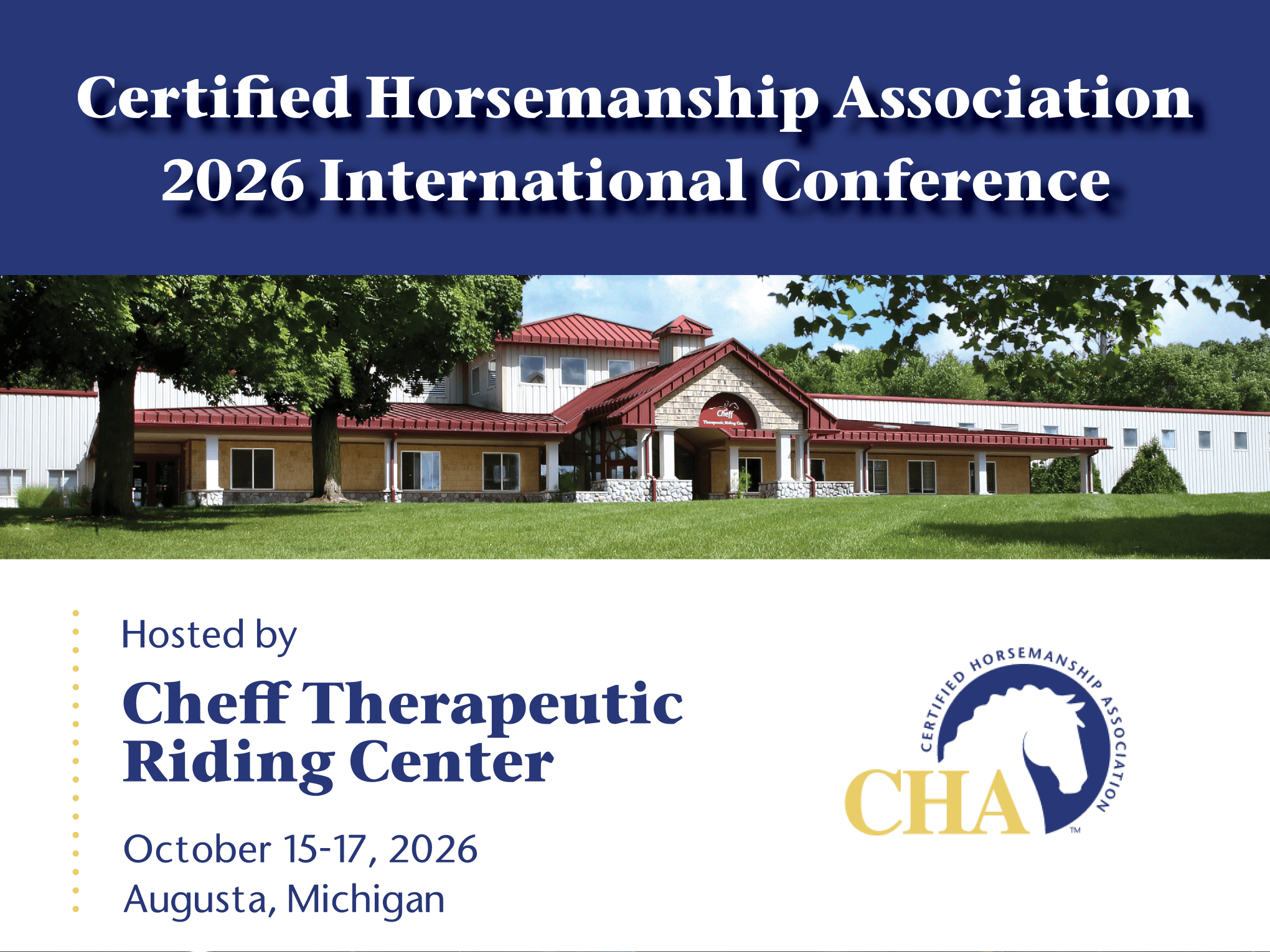
Battle Creek Hunt Club
The Battle Creek Hunt Club’s mission is to provide a fun and exciting fox hunting experience for all its members and guests. All animals and hunt grounds are preserved and maintained for all to enjoy. And we respect and protect our neighbors and their property.
We accommodate all riding disciplines, from trail riding to cross country, and sound safety practices are always followed. Our hunting grounds consist of gorgeous woods, open fields, streams and ponds, with miles of negotiable trails. Jumps are strategically placed throughout, and all can be easily “side-stepped” if desired.
We’re proud of our unique “complete” hunt facility, consisting of a club house and dining room, indoor and two outdoor arenas, access to 1200 trailed acres, space for temporary or permanent boarding, state of the art kennels, shows throughout the year, available lessons and yes wild Michigan red fox!
Come enjoy this living tradition!
Battle Creek Hunt Club Demonstration – Saturday, October 17, 12:00 p.m. – Main Arena
Come meet the staff of the Battle Creek Hunt as they share their love of Foxhunting.
Learn a little of our history, terminology and traditions, meet our hounds and horses, tour the kennel and watch a hunt video of our club. Hear the horn and watch the hounds react.
Hunting to Hounds is a world-wide sport governed by the MFHA, Master of Foxhounds Association.
Come see what it is all about and maybe someday you can join a hunt for a fun filled, adventurous day!
Sally Batton
Sally Batton was the head coach of the Dartmouth College Division I Varsity Equestrian Team for thirty years, coaching dozens of riders to regional, zone and national titles. She is the past Intercollegiate Horse Shows Association National Steward and in 2013 was presented with the IHSA Lifetime Achievement Award in recognition of her contributions and leadership within the organization. In 2020, Coach Batton was inducted into the inaugural class of the IHSA Hall of Fame.
Sally currently travels all over the US, including Alaska and Hawaii, teaching clinics to riders of all ages and levels. In 2023 her training tool invention the Sally Batton Pommel Blocker was launched by Correct Connect, the industry leader in rider training aids.
Batton is the author, along with co-writer Christina Keim, of The Athletic Equestrian and Equicize both Horse & Rider Books publications.
An avid polocrosse enthusiast, Batton is a past board member of the American Polocrosse Association (APA), past member of the United States Pony Club Polocrosse Committee, a certified APA Polocrosse Coach and the author of Polocrosse: Australian Made, Internationally Played.
Batton is a certified instructor with both the United States Hunter Jumper Association and the American Riding Instructor’s Association (ARIA); in 2008, she was named ARIA Instructor of the Year. She is the Founder and President of the Athletic Equestrian League, an organization which offers horsemanship education and competition opportunities to riders from first grade through adult. She is also the host of the Athletic Equestrian Riding in College Podcast.
Batton is currently working on her first fiction novel set in Ireland and featuring Connemara Ponies.
Batton holds an Equestrian Studies degree from Lake Erie College and a master’s degree in Communications from Fairleigh-Dickinson University.
Equicize: Mounted Exercises to Improve Rider Fitness – Friday, October 16, 1:30 p.m. – Main Arena
Equicize is a fun, mounted workout system that will get your riders riding fit fast! Developed by Sally Batton over her 35-year career coaching varsity collegiate athletes, Equicize is like mounted aerobics and is for both English & Western riders, all ages and all levels! All exercises are from her Horse & Rider book Equicize.
Gym Squats on Horseback: How to Improve your Riders’ 2-Point and Lower Leg for a More Stable Ride – Saturday, October 17, 1:45 p.m. – Parish Therapy Arena
Thirty-five-year collegiate coach Sally Batton will go over common position faults that get in the way of a more stable ride. Sally will go over the Athletic Stance, the Power Leg and practical tips and fixes to help your riders get that perfect position taken from her Horse & Rider book The Athletic Equestrian.
Diana Beardsley
Diana Beardsley has been a dedicated member of the Pegasus Farm Equestrian Center team in Hartville, Ohio, since 1999 and currently serves as the Equestrian Operations Manager. She earned a B.S in Equestrian Studies from Lake Erie College and brings extensive experience in equine instruction, program development, and adaptive riding services.
Diana holds multiple professional certifications, including CHA Level 3 English Instructor, Level 2 Western Instructor, and Instructor of Riders with Disabilities (IRD). She is also a PATH Int. CTRI, ESMHL, and Level 1 Driving Instructor.
Throughout her time at Pegasus, Diana has been actively involved in all facets of the organization’s equestrian programming, serving riders of varying ages, abilities, and backgrounds. Since the inception of the Veterans Salute Program in 2007, she has played an integral role in its development and delivery, providing unmounted horsemanship instruction, riding lessons, and carriage driving experiences for veterans, active-duty military personnel, and first responders. Her commitment to equine-assisted services has helped create meaningful opportunities for personal growth, rehabilitation, and community connection through the horse-human partnership.
What is Adaptive Teaching and does it really look that different? – Saturday, October 17, 9:00 a.m. – Main Arena
Adaptive horseback riding shares many of the same foundations as traditional riding lessons such as, balance, communication with the horse, safety, riding skills, and confidence-building — but it is intentionally adapted to meet the physical, cognitive, emotional, sensory, or social needs of each rider. Adaptive horseback riding is not a lesser or simplified version of riding lessons. It is specialized instruction that makes equestrian activities accessible while preserving the challenge, dignity, and enjoyment of horsemanship for every rider. In this presentation learn how to adapt and modify horsemanship and/or riding skills for individuals with disabilities or unique support needs.
Katherine Berg
Katherine has been a member of CHA since 2013 and is an Assistant Certifier for English/Western Riding Instruction. She currently manages Carriage Hill Riding Center for five Rivers MetroParks in Dayton, Onio and has worked there since 2010. The Center typically manages a herd of twenty horses and offers trail riding, summer camps, English horseback riding lessons and vaulting, as well as an extensive volunteer program. Katherine has a liberal arts degree from Earlham College, where she learned to ride through their equine program, and an MBA from Wright State University. In her personal time, Katherine enjoys spending time with her family, going on hikes, caring for her own cats and her personal horse, Oreo, and helping rescue and foster abandoned cats.
Improving Transitions – Friday, October 16, 3:00 p.m. – Main Arena
This session will provide exercises and patterns to use in lessons that will help your students improve their transitions between gaits as well as within gaits. Instructions will include how to prepare the rder and horse for a transiton, how to coordinate aids to ensure smooth, accurate transitions, and identifying some benefits to practicing transitions.
Dustin Boehmer
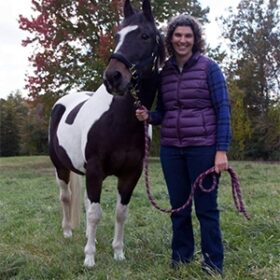
Dustin has lived his entire life in agriculture, raising and showing poultry and beef cattle for most of his youth career. He began riding and exhibiting horses the summer of ‘95, with his first horse, an Arabian named Dancer. Shortly thereafter Dustin switched to working cattle and speed events through high school.
In college, Dustin started working in the performance horse industry and showed IHSA. After college, Dustin opened his business full time; training, exhibiting, coaching, judging and clinicianing.
Since then, he has amassed several accomplishments; American Buckskin Horse Association, Appaloosa Horse Club, Michigan Quarter Horse Association Year End High point awards, 2011 Reserve ABRA World Champion, 2012 AQHA Youth Rookie of the Year, and 2014 Top Ten at AQHA Level 1 Championships amongst the most notable awards. In 2017, Dustin joined the Interscholastic Equestrian Association. Now in his seventh year with IEA, Dustin has coached students and teams to numerous National finals and Individual Championships. He also serves on the Western Committee and is on the IEA National Board of Directors. Currently residing in Mason, Michigan, Dustin enjoys instructing students, substitute teaching and managing the 45 acre farm that is also home to Michigan State University’s Polo Club!
Riding the Western Pattern – Friday, October 16, 10:30 a.m. – Parish Therapy Arena
Performing a western pattern during competition on a familiar horse can be a challenge. Imagine competing on a horse you just met!! Interscholastic and Intercollegiate riders face this challenge at every team event they compete in. Dustin Boehmer will explain how to teach your students to break down patterns into easy-to-accomplish steps that they can apply to any horse they sit on.
Dr. Bob Coleman
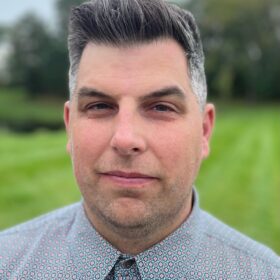
Dr. Bob grew up in western Canada and has had a lifelong interest in horses. He is a graduate of the University of Manitoba with a bachelor’s degree in agriculture with a major in Animal Sciences and a master’s degree in Animal Science. After graduating, Coleman worked in the Canadian Feed Industry as a nutritionist for two major feed companies before moving in 1980, to Alberta Canada to be the Extension Horse Specialist for Alberta Agriculture. During his time in Alberta, he completed his Ph.D. at the University of Alberta with a focus in Equine Nutrition. In 1998, Dr. Bob moved to the University of Kentucky as the Equine Extension Specialist. Dr. Bob has worked with horse owners across the state in areas of horse management with an interest in facility design and management. This has included looking at ways to provide feed and water safely and effectively to horses. In addition to his Extension duties, Dr. Bob teaches in the Equine Science and Management program courses on Tools and Tack in the horse industry and Equine Facility design and management. Dr. Bob is active in the Horse Industry serving as on the AQHF research committee and is a past president of the Kentucky Quarter Horse Association. Professionally, Dr. Bob is a member of the Equine Science Society and he serves as the executive director, is a member of the American Registry of Professional Animal Scientists, and is a Diplomat in the American College of Animal Science and the American Society of Animal Scientists. As a member of CHA, Coleman is certified as a Lead Site Visitor and Trainer and serves on the board as the Past President.
Giving Direction: Linking the Horse & Rider – Thursday, October 15, 1:00 p.m. – Bravo/Charlie Room
While there are many times, we see horses performing incredible activities without a bit or bridle for most of us that is not the case. We use the bridle with a bit to provide a means of communication. It is not the only part of rider horse communications but certainly a significant one. The round table will be an opportunity to discuss how bits function in a way that you can communicate that to your students. The session might seem a bit academic but let’s talk about function outside of what we sometimes call certain bits. As an example, and while we all might know this a snaffle bit is not a snaffle bit because it has a jointed mouthpiece. Bring your knowledge and understanding to the round table for bit and bridle communication.
What is in your horse’s mouth?
Julie Fershtman
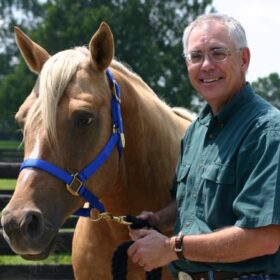
Julie I. Fershtman is an Equity Shareholder in Foster Swift’s Southfield (Southeastern Michigan) office. She is highly experienced in handling a wide variety of equine industry disputes through litigation and alternative dispute resolution (arbitration, mediation). She also drafts contracts involving numerous types of transactions with the goal of helping her clients avoid disputes. For her years of expertise and success handling equine-related matters, she is widely recognized as one of the nation’s leading Equine Law practitioners. Her clients are involved with all breeds and disciplines, and she serves trainers, stables, industry professionals, associations, insurers, businesses, show management, equestrian athletes, clinicians, and individual horse owners across the United States. Her expertise also includes business litigation, fraud litigation, property disputes, and insurance litigation.
A lawyer for 39 years, she has achieved numerous courtroom victories and tried cases before juries in 4 states. In one trial she handled, her clients won the case, and the court ordered the non-prevailing party to pay 100% of her legal fees and costs. She has also litigated equine insurance cases (representing insurers) in federal courts that helped shape the jurisprudence related to animal mortality coverage. She has served as out-of-state (pro hac vice) counsel on lawsuits in 21 jurisdictions.
Equine-related liabilities & Equine activity liability Acts: how they work & how to comply with them. – Saturday, October 17, 10:30 a.m. – Classroom
Currently, 48 states around the country have some form of an equine activity liability law. These laws limit or control certain liabilities involving a variety of equine-related activities. All of these laws differ, and questions abound as to how they work, what people and businesses in the equine industry need to do to comply, how these laws impact waivers/releases, what kind of signs should be posted and who should post them, what happens if there is no compliance, and what types of liabilities still exist in the states with these laws.
The speaker, Julie Fershtman, is considered to be among the nation’s leading experts in regard to these laws. She is also a highly experienced equine law practitioner who has handled liability cases in multiple states. This presentation will demystify these laws, explain what they do and don’t do, and discuss compliance requirements that differ around the country. Julie was involved in the passage of Michigan’s Equine Activity Liability Act in the 1990s and helped draft the law’s amendment around 2015. She has been speaking on liability issues at CHA conferences and around the country over the past few decades.
Equine-related insurance mistakes to avoid – Saturday, October 17, 1:45 p.m. – Classroom
When equine businesses and professionals avoid disputes involving equine insurance policies, they protect themselves from potentially enormous economic risks. This presentation will discuss equine mortality insurance policies in addition to equine liability insurance policies and will address in a clear and understandable way misunderstandings and legal disputes that have occurred over the years involving these policies so that everyone can be a step ahead, know the right questions to ask their insurance agents, make sure they are adequately covered, and avoid problems that can jeopardize coverage. The speaker, Julie Fershtman, has litigated equine insurance coverage disputes around the country for decades (representing insurance companies) and brings a knowledgeable perspective that is eye-opening and valuable.
Emily Fields
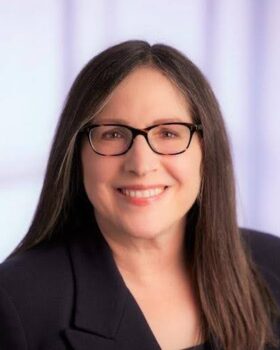
Emily Fields serves as the Program Director, Herd Manager, Education Coordinator, and Lead Instructor at the Cheff Therapeutic Riding Center, where she has been a dedicated team member for the past 10 years. She brings a wealth of experience in equine-assisted services and horsemanship education, holding certifications as a PATH International Advanced Certified Therapeutic Riding Instructor (CTRI), Equine Specialist in Mental Health and Learning (ESMHL), Equine-Assisted Learning (EAL) Facilitator, and Certified Horsemanship Association (CHA) Level 3 Instructor of Riders with Disabilities (IRD).
Emily’s lifelong passion for horses began through 4-H and continued into a successful career competing on the American Paint Horse Association (APHA) circuit for many years. Today, she combines her extensive equestrian background with her commitment to education and therapeutic riding, helping riders, participants, and equine professionals develop skills, confidence, and meaningful connections through horses.
What is Adaptive Teaching and does it really look that different? – Saturday, October 17, 9:00 a.m. – Main Arena
Adaptive horseback riding shares many of the same foundations as traditional riding lessons such as, balance, communication with the horse, safety, riding skills, and confidence-building — but it is intentionally adapted to meet the physical, cognitive, emotional, sensory, or social needs of each rider. Adaptive horseback riding is not a lesser or simplified version of riding lessons. It is specialized instruction that makes equestrian activities accessible while preserving the challenge, dignity, and enjoyment of horsemanship for every rider. In this presentation learn how to adapt and modify horsemanship and/or riding skills for individuals with disabilities or unique support needs.
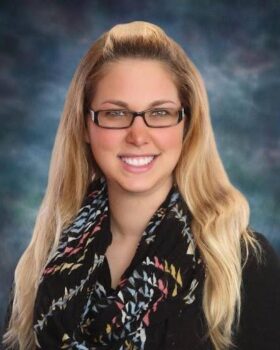
Tammi Gainer
Having grown up around horses, Tammi began her professional equestrian career in 1989 as a trail guide at a large ranch camp where she was first introduced to CHA (Certified Horsemanship Association) and attended a Standard Instructor Certification Clinic in 1990.
In the spring of 1995 Tammi joined the instructor staff at Pegasus Farm Therapeutic Equestrian Center in Hartville, OH. While working at the Farm part-time and home schooling her three children, Tammi also spent much time working under several national trainers in both reining and dressage. In addition to her CHA Instructor certification. She also became a PATH Intl. certified instructor.
In 2000, she achieved CHA Master Level Instructor and E/W/I Certification Staff status and has since earned Certification Staff status in the Instructors of Riders with Disabilities (IRD) and Vaulting Coach programs as well.
Tammi was promoted to Equestrian Director at Pegasus in 2005 where she managed all aspects of the equestrian programs that serve 275 plus students each week participating in areas such as horsemanship, riding, driving, vaulting, veterans, and youth-at-risk programs. In 2010 Tammi has acquired her AQHA (American Quarter Horse Association) Professional Horseman status; an organization she is especially proud to be a part of.
In September 2007 Tammi was elected to the CHA Board of Directors and held various positions such as Chair of the Education & Training Committee, Treasurer, Secretary, President Elect, & President.
In March of 2023 Tammi was give the opportunity to take on the responsibility of CHA’s Executive Director. “Since first joining CHA in 1990 this organization has become such an integral part of my life both professionally and personally. To be a part of an organization that believes so strongly in promoting safety & education in horsemanship across the lines of disciplines is definitely a credit to our profession. Personally, I have made such wonderful friends from many different backgrounds and walks of life; yet we all have a common denominator ~ Changing Lives through Safe Experience with Horses! I look forward to many more years being a part of this amazing “family” called CHA.”
General Announcements and Award Ceremony Host
Safe and Effective Mounting & Dismounting Techniques – Friday, October 16, 10:30 a.m. – Main Arena
Mounting and dismounting are critical components of therapeutic horseback riding, directly impacting rider safety, comfort, confidence, and independence. This session will explore best practices for using mounting ramps and mechanical lifts with riders of varying abilities and support needs. Participants will learn proper positioning, communication strategies, volunteer roles, risk management considerations, and techniques for creating smooth, safe transitions on and off the horse. Through demonstrations, practical tips, and real-world examples, attendees will gain valuable tools to enhance accessibility and safety within their therapeutic riding programs.
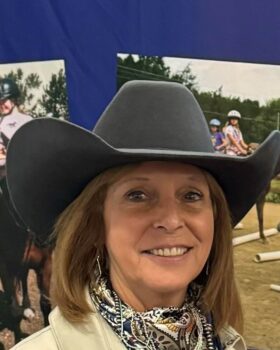
Julie Goodnight
Julie is best known for her TV show about horse training– which aired weekly for eleven years– and for her sensible and kind training for all equestrians. Her methods are grounded in natural horsemanship, classical riding, and understanding what motivates horses. Julie is the CHA International Spokesperson and she teaches at clinics, expos and special events everywhere and offers online education, how-to videos, and her own tack and training tools at JulieGoodnight.com.
Working Equitation: Fun, Functional, and Teachable: A Tool for Every Lesson Program! – Friday, October 16 , 12:00 p.m., Main Arena
Working Equitation combines dressage-based skills, practical obstacles, and real-world horsemanship in a format that benefits riders of all levels and all disciplines. This mounted presentation will show how to use Working Equitation concepts to make flatwork fun again while improving accuracy, confidence, communication, and safety. Attendees will learn how the sport works, what skills it develops, and how to incorporate simple working equitation exercises into everyday lesson programs.
Need for Speed: Riding Fast with Control: Building Confidence at the Canter, Lope, and Gallop – Saturday, October 17 , 10:30 a.m., Main Arena
Often riders are comfortable at slower gaits but lose confidence, balance, or control when the pace increases. This mounted presentation will outline progressive exercises instructors can use to help riders develop security, steering, rate, and emotional control at faster gaits. From trail riding and gymkhana to cattle work, jumping, and open-country riding, attendees will learn practical ways to prepare riders to handle speed safely and effectively.
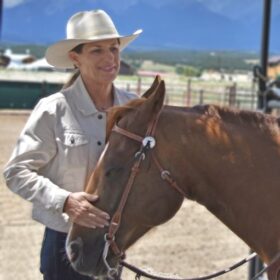
Holly Hansz-Ax
Holly has been a member of CHA since 2003 when she earned her English/Western Master Level Instructor status. She enjoys CHA not only for the ongoing educational opportunities, but also the friendship, support and comradery. Holly had her first horseback ride at age four on a family trip out west and has been hooked ever since. As a youth she showed hunters and jumpers, and qualified to compete at both the Medal and Maclay finals. Holly worked in elementary education as speech-language pathologist until her retirement in 2016. She owned and operated Horse Dreamers LLC, a boarding and lesson facility, until 2022. Currently Holly is an instructor at Oakland County 4H Horse Camp every summer and teaches a few lessons throughout the year.
Ride With Your Whole Body – Friday, October 16, 9:00 a.m. – Parish Therapy Arena
Riders will come away from this lesson with a heightened awareness of how their bodies work with and affect the horses’ bodies in motion, enabling closer communication. Riders will feel free in the saddle, soft and relaxed, yet secure. Horses will be allowed to move in a less restricted way.
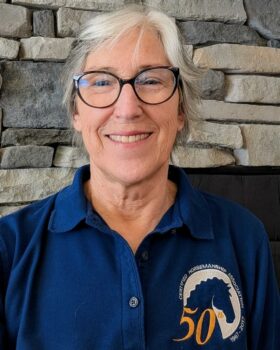
Melissa Howard
Throughout my lifelong career in the equine industry, I have had the privilege of working across nearly every facet of the field—from camps and ranches to Thoroughbred breeding, racing, rescue, and rehabilitation, as well as equine tourism. These roles took me across the globe, working internationally throughout Europe and New Zealand.
All of those diverse experiences eventually brought me back home to Stark County, Ohio, where I have spent over 20 years pursuing my passion for connecting people and horses at Pegasus Farm. I have worn many hats at Pegasus, serving as Volunteer Coordinator, Instructor, Event Coordinator, and fundraising campaigns, alongside all the hands-on details in between.
Currently, as the Military and First Responders Program and Events Coordinator, I am deeply honored to work with our active-duty service members, veterans, and first responders. Horses have an extraordinary capacity to teach and heal, and witnessing the powerful bonds formed between our participants and their equine partners remains the most rewarding part of my work.
I hold professional certifications through CHA (Certified Horsemanship Association) and PATH International (Professional Association of Therapeutic Horsemanship).
Volunteer: Where to Find Them & How to Keep Them – Thursday, October 15, 1:00 p.m. – Bravo/Charlie Room
Volunteers are the heart of every successful therapeutic riding center, but finding, training, and retaining dedicated volunteers can be an ongoing challenge. Join this interactive roundtable discussion to share ideas, successes, and lessons learned with fellow program leaders and instructors. Topics will include volunteer recruitment strategies, effective orientation and training practices, volunteer recognition, creating a positive volunteer culture, and reducing turnover. Participants will leave with practical ideas and valuable connections to help strengthen their volunteer programs and support their mission of changing lives through safe experiences with horses.
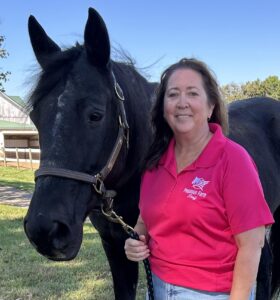
Celia King
Celia is the lead consultant at Arrants McSwain Team Building where she teaches leaders how to coach their team. She uses her 25 years’ of experience with the Myers Briggs to give clients a logical framework to understand how people are wired, and she uses equine assisted learning to help leaders develop the intuition necessary to work with people. Celia has a Master’s degree in Communication, is an MBTI Master Practitioner and a certified Equine Experiential Education Association Practitioner. She works with a wide range of clients including Fortune 500 companies, small businesses, educational organizations and non-profits.
Things Will Slow Down after the Busy Season… But They Don’t. How to run a barn when every season is busy – Thursday, October 15, 1:00 p.m. – Bravo/Charlie Room
Most barn leaders keep hoping the next season will finally create enough breathing room to get organized, catch up, and feel less reactive. But in horse programs, every season tends to become the busy season. This round table discussion focuses on how leaders can create more stability and intention in environments where the work never fully slows down.
Using the concept of the “Ideal Week,” participants will explore practical ways to structure time, protect priorities, reduce constant firefighting, and create rhythms that make busy seasons more manageable. This conversation-based session is designed for barn owners, managers, instructors, and program leaders who want to stop living entirely in reaction mode and build a more sustainable way of working.
Participants are encouraged to bring their calendars. This will be a hands-on session with time to actively work on designing an Ideal Week they can begin using in real life.
The Single Biggest Problem in Communication Is the Illusion That It Has Taken Place: How to talk clearly with barn staff, volunteers, veterinarians, farriers and everybody else – Friday, October 16, 9:00 a.m. – Classroom
One person says, “Keep a closer eye on him.” Another hears, “Nothing urgent.” One person thinks they gave clear instructions. The other thinks they followed them. Barn communication problems often happen because people are speaking at different levels of specificity without realizing it. Some people naturally communicate in broad ideas and assumptions, while others need concrete details, examples, and direct language to clearly understand expectations.
This session explores the difference between abstract and concrete communication and how those differences create misunderstandings in barns, riding programs, and horse care teams. Participants will learn practical tools for giving clearer directions, checking for understanding, reducing assumptions, and communicating more effectively with staff, volunteers, clients, veterinarians, farriers, and other professionals.
Friendly….But Still the Boss – Friday, October 16, 1:30 p.m. – Classroom
Barns often function like families, communities, and workplaces all at the same time. That closeness can create warmth and loyalty, but it can also make boundaries, accountability, and leadership difficult. This session focuses on how to lead people you genuinely care about without becoming unclear, avoidant, or overly controlling. Participants will explore ways to maintain trust and connection while still making decisions, setting expectations, and addressing problems directly.
If You Want It Done Right, You Have to Do It Yourself… Or Do You? Building barn staff and volunteers who notice, decide and act without being asked – Saturday, October 17, 9:00 a.m. – Classroom
Many barn leaders feel trapped in constant supervision, problem-solving, and putting out fires because nobody else seems to notice what needs done. This session explores why capable people sometimes wait to be told, how leaders accidentally train dependency, and what helps staff and volunteers develop confidence, initiative, and judgment. Participants will leave with practical strategies for creating a more observant, responsive, and empowered barn culture.
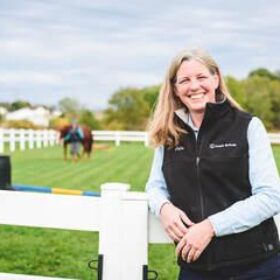
Darrell Nephew
For more than 45 years, Darrell Nephew has been one of the leading authorities in Western saddle fit, dedicating his career to improving the relationship between horse, rider, and saddle. A master saddle maker, saddle tree developer, educator, and innovator, he has built more than 2,000 saddles, fitted thousands of horses, and helped shape saddle fit technology used by over 1,000 saddle makers worldwide.
As Co-Founder of Tucker Trail Saddles and Vice President of Circle Y Saddles, Tucker Trail Saddles, and Precision Saddle Tree, Darrell has spent decades developing saddle trees, educating dealers and riders, and advancing practical solutions for better saddle fit. Today, he leads the development of Horse Fitter Pro, combining decades of hands on experience to make professional saddle fitting more accurate, accessible, and understandable for riders everywhere.
Saddle Fitting Techniques – Friday, October 16, 3:00 p.m. – Parish Therapy Arena
Saddle fit is all about weight distribution and doesn’t have to be an obstacle that you need to overcome. Come and watch how to take the worry out of saddle fitting and enjoy your saddle and horse. If saddle fit has been difficult for you, come to this session and get your horse comfortable so you can enjoy the ride.
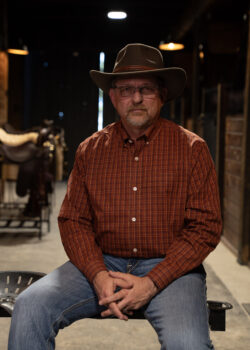
Ingrid Pearson
Ingrid Pearson has been a member of CHA since 1992, earing her Master Instructor certification in 2003, and is now the State Rep for Michigan. Ingrid credits CHA for her focus on safety, her opportunities for learning in a non-competitve environment, and, of course, some lifelong great friendships.
For education and experience, Ingrid started riding at age 10 competing in Hunter/jumper, and later guided trail rides through the Cleveland Metroparks as a high school job. She moved on to three day eventing and contesting, and attended the University of Findlay where she learned showmanship, western pleasure, western equitation, western riding, cutting, reining, and colt breaking. Ingrid graduated Cum Laude with a degree in Equine Science and a degree in Equine Farm Administration.
Since graduating, Ingrid has done business consulting for horse and farm businesses, riding lessons, coached an intercollegiate riding team, advised for 4H programs, bred harness horses, and has mentored numerous up and coming professionals.
Outside of her horse career, Ingrid carries an OSHA 30 certificate, and is the Safety Admin and Maintenance Planner for a fortune 500 company.
Cantering: Take the Lead; Change the Lead – Friday, October 16, 1:30 p.m. – Parish Therapy Arena
Intro to lead changes is a class open to level 3 and level 4 riders who are comfortable cantering as a group and individually. A strong sense of humor is also required.
Lesson focus will be on body position, pre-requisites for lead changes, and riding accurately with the aids. This class will provide a step-by-step lesson plan for riders learning lead changes and for horses who are being trained for lead changes.
Beth Powers
Beth Powers of Bellefontaine, Ohio an educator who is a life member of the Certified Horsemanship Association. She has served over twenty years on the CHA board of Directors as a committee member and chairperson, executive committee, and president. She also has been on the board of directors for the American Horse Youth Horse Council, with a focus on youth programs during the conferences. Powers was the equestrian director of a YMCA resident camp for over 20 years, while at Camp she was a member of the American Camping Association and became a site visitor for the accreditation program. Currently she works as a substitute teacher, volunteers, and teaches part time at Discovery Riders a therapeutic riding barn nearby.
Through her involvement in CHA Powers has had the opportunity to present talks at various trade shows and conferences throughout the country. She is a certified English/Western instructor, pack and trail overnight guide, a CHA site visitor and trainer. She helps other pet lovers by being a pet sitter and enjoys traveling, repairing horse tack and working in the garden.
Round Table Moderator – Thursday, October 15, 1:00 p.m. – Bravo/Charlie Room
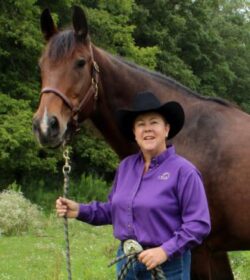
Sanna Roling
A lifelong horse enthusiast, her formal training arose as a desire to earn her Girl Scout Horsewoman badge. Volunteering at a a local stable during her teenage years she earned her riding lessons and the opportunity to ride non the Oakbrook Blessing of the Hounds over the 1959 Pan American Games 3-day event course. College and a family intervened. 44 years ago, she landed in Spring, TX and through Girl. Scouts found her way to CHA. Currently the Texas State Representative, Level 3 English, Level 2 Standard Instructor, Site Visitor, and life member, Sanna has served on a number of committees, assisted with editing or writing most of our manuals, and was involved in designing IRD. CHA honors include 2016 Volunteer of the Year, 2025 Lifetime Achievement award and two of her horses achieved CHA Horse of the Year (Smokey and Smut). Currently a Path Int’l CTRI, Equine Specialist in Mental Health and Learning, Sanna also served on the PICC and was the last secretary of the NARHA Competition Committee. A Special Olympics Equestrian Coach (Level 3 and Unified) she brought the sport to Area 4, was the 1995 World Games Coach from Texas, played an instrumental part in creating the Top Hands Horse Show (Houston Livestock Show & Rodeo) which was duplicated by Ft Worth, TX (Chisholm Challenge), Austin, TX (Golden Stirrup), and the Oklahoma State Fair (Equine Empowerment Horses Show). Now a retired Texas Special Educator, Sanna focuses her energy on developing the people and resources to take Dream Catcher Stables Inc forward for decades to come. As she teaches youth and adults with disabilities to ride and care for horses to the best of their ability they improve her teaching methods.
The Heart of Riding – Thursday, October 15, 1:00 p.m. – Bravo/Charlie Room
This discussion will provide understanding of the art and value of riding a horse being it once, twice, a few lessons, or a lifelong passion or career. The eyes control the body Participants will understand how a simple movement – Look to the left/right/up/down affects the body position and cues the horse. Discussion will include actual body parts positions which are or affect proper riding cues. Relaxation for connectivity Participants will glimpse the ability of the horse to accomplish the ultimate in the rider – three independent body areas for “perfect” position and control. Disassociating our body into three parts for proper position and relaxation is a challenge to most people. Horses can help.
Those non-riding life goals: You will hear about accomplishments and goals resulting from interaction with horses and contributing to society as a whole. Self-esteem, speech, physical improvements, comfort in interactions with others, opportunity to destress while determining personal life goals and more. In this section outcomes of Dream Catcher Stables Inc athletes and volunteers will be shared.
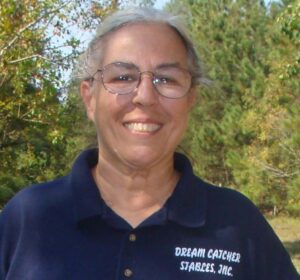
Richard Scovel
Rich Scovel is an AFA Certified Journeyman Farrier. He is committed to continuing his education through seminars, clinics, and competitions. Rich regularly attends educational events on hoof care and forging, and has competed with the World Championship Blacksmiths. Rich has held several offices in the Michigan Horseshoers Association, and is currently serving as treasurer on its Board of directors.
He loves a challenge, and enjoys working on therapeutic cases as well as performance horses Outside of horseshoeing, Rich enjoys outdoor activities, like hunting, fishing, kayaking, mountain biking, and snowboarding.
Hoof Care 101 – Friday, October 16, 10:30 a.m. – Classroom
Interactive Hoof Dissection: We will explore the external and internal structures of the hoof. The cadaver hoof will be shown before and after trimming, then with a shoe shaped to fit that specific cadaver hoof to show the importance of shoe shape.
We will review basic structures and functions of the hoof with a brief overview of common maladies of the hoof and hoof structures (laminitis, navicular, etc.), and what a farrier can do to help.
There will be opportunities for audience questions and discussion.
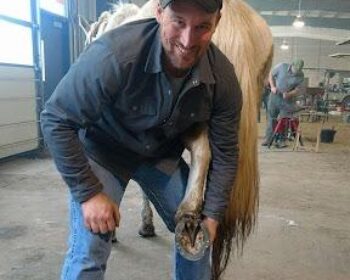
Daniel Stewart
Daniel Stewart is a former international team coach, mental-coaching consultant to many equestrian associations; has published four books on equestrian sport psychology, biomechanics and fitness; and is considered one of the world’s leading experts on equestrian sport psychology, athletics and performance… and he’s coming to teach us!
His upbeat and empowering workshops and keynote are the perfect way for us to become more confident and courageous by learning how to overcome fears, failures and frustrations. It’s also perfect for anyone who gets a bit nervous, experiences show jitters, struggles with mistakes or memories… or anyone who just wants to put a little more happy in their happy place!
The Fishbowl Effect – Friday, October 16, 3:00 p.m. – Classroom
Learn the eight causes and five solutions to performance anxiety and fears on and off your horse!
The T Strategy – Friday, October 16, 6:00 p.m. – Keynote Speaker “Boots & Bling” Evening Gathering – Hotel – Bravo/Charlie Room
Becoming meaningful and motivating mentors is possible and we’ll discuss how to make it happen!
Bold Brave Breakfast Bootcamp – Saturday, October 17, 9:00 a.m. – Parish Therapy Arena
Get up early and learn how to turn any fitness exercise into a perfect cross-training program for equestrians!
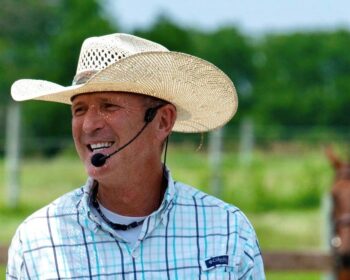
Dr. Rachel Wright
Dr. Rachel Wright, DVM, CVA, cAVCA graduated from Michigan State University College of Veterinary Medicine in 2016. Dr. Wright obtained acupuncture certification from Chi Institute in 2016 and certification in animal chiropractic through the American Veterinary Chiropractic Association (AVCA) in 2018.
Dr. Wright currently acts as the Medical Director of Town Center Veterinary Associates in Howell and is the Owner/Operator of Great Lakes Animal Health based in Fowlerville, Michigan. She founded Great Lakes Animal Health in 2020 as a way to provide alternative therapy options for canine, feline, and equine patients in southern Michigan.
Chiropractic & Body Work – Saturday, October 17, 10:30 a.m. – Parish Therapy Arena
This live demonstration is designed to highlight chiropractic care as a modality to increase equine comfort, enhance flexibility and mobility, and maintain proper alignment to decrease the likelihood of future musculoskeletal injury. Dr. Rachel Wright will walk through the key aspects of a chiropractic evaluation including gait analysis, static and motion palpation, adjustment techniques, and follow up stretching exercises.
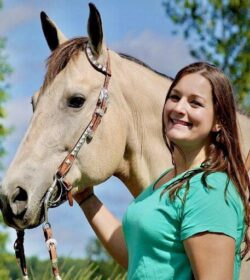
Jo-Anne Young
Jo-Anne Young has been teaching riding for 59 years, and became a CHA EWI certifier in 1987. She STILL gets goosebumps up her arms when a rider has a “lightbulb moment” and FEELS the improvement in the horse as the correct aids in the correct moment are applied. She is grateful for the many people who have supported her pursuit of excellence, and in particular her mentor, Olympic coach Walter Zettl with whom she had the privilege of studying for 25 years. When she teaches, she is paying forward to the next generation the blessings that were poured into her own life.
Teaching Effective Seat Aids – Friday, October 16, 9:00 a.m. – Main Arena
Exercises that will help your riding students identify location and timing of aids that will trigger the desired responses while deepening understanding of communication.
Correctly Teaching the 3 Loop Serpentine – Saturday, October 17, 1:45 p.m. – Main Arena
How to pick visual focal points and coach accurate timing of the rider’s aids, leading to better accuracy, better balance of horse and rider, and better outcomes from this valuable exercise.
Certified Horsemanship Association
1795 Alysheba Way, Suite 7102
Lexington, KY 40509